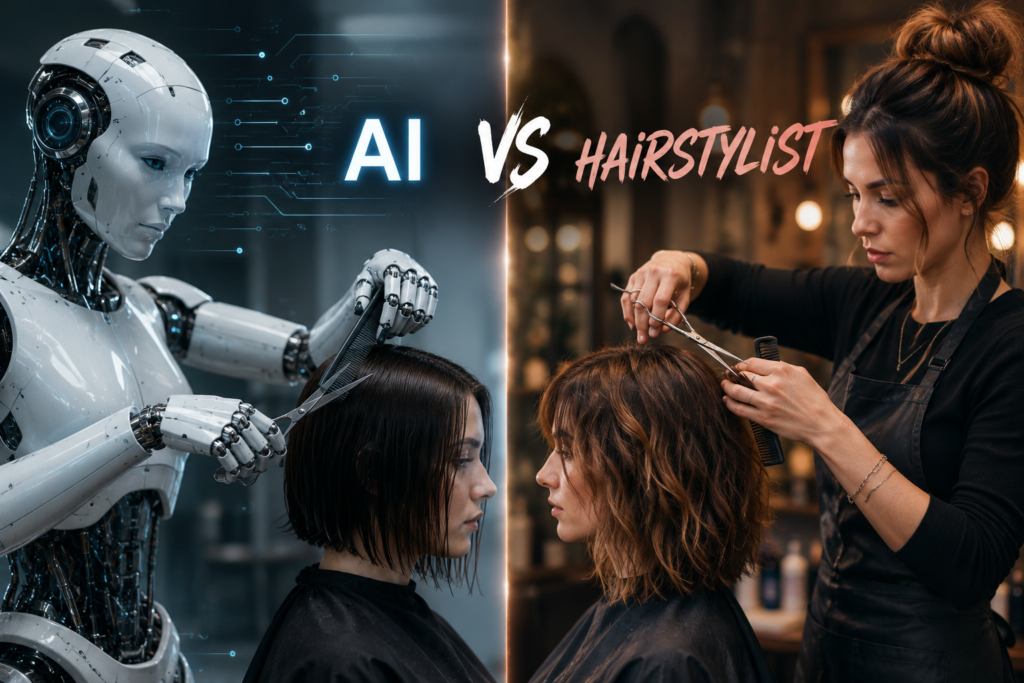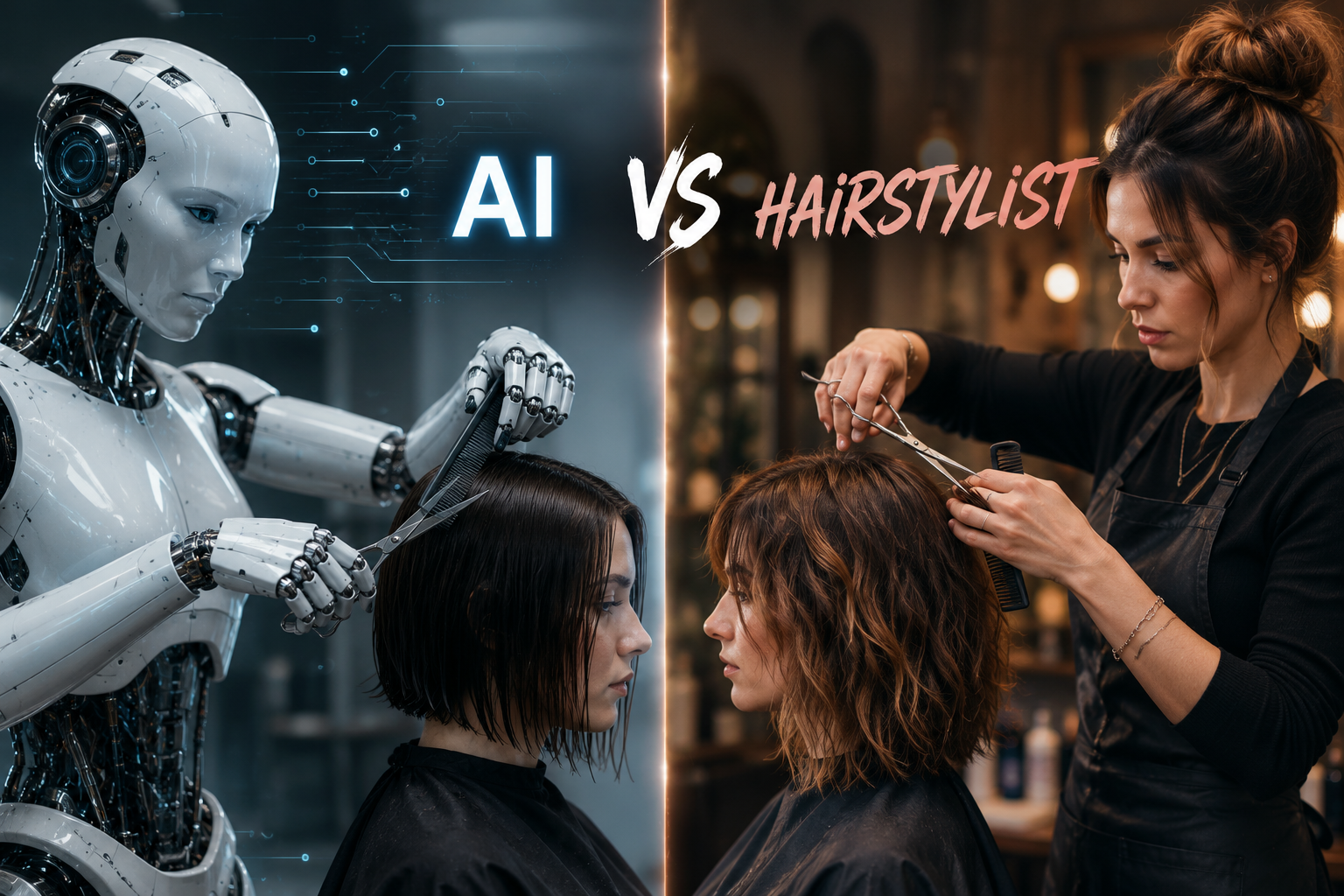
Artificial intelligence is changing the way people work. It can write content, organize schedules, recommend products, create images, and help businesses communicate more efficiently. Because of these changes, many people are beginning to wonder whether AI will eventually replace certain careers.
For anyone considering cosmetology school, that may lead to an important question:
Could AI replace cosmetologists?
The answer is no—not in the ways that matter most.
AI may become a useful tool within the beauty industry, but it cannot replace the creativity, technical skill, personal connection, and hands-on care that professional cosmetologists provide.
Cosmetology Is a Hands-On Career
Cosmetology requires much more than knowing which haircut, color, or style is popular. A cosmetologist must physically perform services with precision and care.
Professionals use their hands to cut, color, style, shape, blend, section, formulate, and customize each service. They must adjust their technique based on a guest’s hair texture, density, condition, growth patterns, face shape, lifestyle, and desired result.
AI can suggest a hairstyle or generate an inspiration picture, but it cannot stand behind the chair and safely create that look on a real person.
Every guest is different, and every service requires professional judgment. A formula that works beautifully for one person may not work for another. Cosmetologists must evaluate the hair in front of them and make decisions in real time.
That level of hands-on skill cannot be duplicated by a computer program.
Guests Want Personal Connection
Beauty services are personal.
Guests often spend hours with their cosmetologist. During that time, they may talk about their jobs, families, celebrations, challenges, and major life events. Over time, many guests develop a strong sense of trust and loyalty toward their beauty professional.
A great cosmetologist does more than provide a service. They listen, communicate, encourage, educate, and help guests feel comfortable.
AI may be able to answer questions, but it cannot genuinely build a relationship. It cannot notice that a guest seems nervous, understand the emotional importance of a transformation, or provide the same warmth and reassurance as a caring professional.
People do not visit salons only because they need a haircut. They also go because they want to feel seen, cared for, refreshed, and confident.
That human experience is one of the strongest reasons cosmetology will continue to be valuable.
Creativity Cannot Be Fully Automated
Cosmetology combines science, technique, and art.
A successful cosmetologist must understand color theory, hair structure, product chemistry, sanitation, safety, design principles, and professional techniques. They must then use that knowledge creatively to produce a customized result.
AI can provide ideas, but the cosmetologist must decide whether those ideas are realistic, flattering, safe, and achievable.
A picture generated by AI may show a beautiful color result, but it does not explain the guest’s starting level, previous chemical history, hair condition, necessary formula, processing time, maintenance needs, or number of appointments required.
Cosmetologists turn inspiration into reality. That requires training, experience, creativity, and problem-solving.
Beauty Trends Constantly Change
The beauty industry is always evolving.
New techniques, products, tools, services, and trends appear regularly. Professional cosmetologists continue learning throughout their careers so they can offer modern, safe, and relevant services.
AI may help professionals research trends or brainstorm ideas, but cosmetologists will still be responsible for applying those ideas correctly.
In fact, technology may create even more opportunities for beauty professionals. Cosmetologists can use AI to help with tasks such as:
- Creating social media captions
- Organizing appointment reminders
- Developing content ideas
- Drafting client-care instructions
- Researching trends
- Managing business tasks
- Visualizing possible style changes
These tools may make parts of the job easier, but they do not replace the actual professional. Instead, they allow cosmetologists to spend more time focusing on their guests, creativity, and services.
Professional Judgment Matters
Cosmetologists make important decisions throughout every service.
They must recognize when hair is damaged, when a chemical service may be unsafe, when expectations need to be adjusted, or when a guest should be referred to a medical professional.
They also need to communicate honestly about what is possible.
For example, a guest may show a picture of icy-blonde hair and expect to achieve it in one appointment. A trained cosmetologist must evaluate the guest’s current color, condition, previous services, and overall hair integrity before creating a plan.
AI cannot physically examine the hair, perform a strand test, feel its elasticity, or monitor its condition during processing.
Professional judgment protects both the guest and the integrity of their hair.
Cosmetologists Help People Feel Confident
One of the most powerful parts of the beauty industry is its ability to affect how people feel.
A haircut, color, blowout, or complete transformation can help someone feel more confident before an interview, wedding, graduation, first date, or major life change.
Cosmetologists are often present during meaningful moments. They help guests express their personalities and feel more comfortable in their own appearance.
That emotional impact cannot be measured by technology alone.
AI can suggest a look. A cosmetologist can help someone feel transformed.
Is Cosmetology Still a Smart Career Choice?
For someone who enjoys creativity, working with people, learning new techniques, and building hands-on skills, cosmetology can still offer a meaningful career path.
The industry may continue to change, but change does not automatically mean replacement.
Calculators did not eliminate accountants. Cameras did not eliminate artists. Online tutorials did not eliminate professional educators. In the same way, AI is unlikely to eliminate cosmetologists.
Instead, beauty professionals who understand how to use technology may gain an advantage. They can use new tools to improve marketing, communication, organization, education, and business growth while continuing to provide the human services guests value most.
The Future of Beauty Is Human
AI will likely become part of the beauty industry, but it will remain a tool—not the professional behind the chair.
It cannot replace the hands that create the service, the eyes that notice the details, the mind that solves unexpected problems, or the personality that makes a guest feel welcome.
Cosmetology is built on trust, creativity, skill, communication, and personal care.
As long as people want to look good, feel confident, express themselves, and connect with someone they trust, trained cosmetologists will continue to be needed.
The future of beauty is not humans versus technology.
It is talented beauty professionals using technology while continuing to provide something AI cannot: a real human touch.